In a marketplace saturated with noise, a business’s ability to convert a prospect into a customer rests largely on the strength of the offer. An offer is not merely a product or service; it is the entire package of value, incentives, and terms presented to the buyer. Many entrepreneurs mistake their core product for the offer itself, failing to realise that how a product is framed, priced, and de-risked is often more important to the decision-making process than the features of the item being sold.
Developing an effective marketing offer requires a blend of psychological insight and mathematical precision. It involves understanding the specific pain points of a target segment and presenting a solution that feels both inevitable and urgent. This guide explores the foundational components of high-converting offers, moving beyond simple discounts to focus on value creation, risk reversal, and clear communication. By the end of this article, you will have a structured framework for building offers that resonate with your audience and drive measurable business growth.
Defining the Core Value Proposition
The foundation of any compelling offer is a clearly articulated value proposition. Before considering discounts or bonuses, you must define the primary transformation your product provides. Customers do not buy software; they buy time savings. They do not buy consulting; they buy a path to increased revenue or reduced stress. Identifying this 'end state' allows you to build an offer that speaks directly to the desired outcome of the prospect, rather than just listing technical specifications or service hours.
To define this value, conduct a thorough analysis of the specific problems your target audience faces. A common mistake is attempting to solve too many problems at once, which dilutes the perceived efficacy of the offer. Instead, focus on a singular, high-value problem. By narrowing the scope, you can tailor the language of your offer to match the internal dialogue of your potential customer, making the solution feel bespoke and highly relevant to their current situation.
Consider the distinction between 'features' and 'benefits'. A feature is what the product is (e.g., a 24-hour battery), while a benefit is what the feature does for the customer (e.g., peace of mind during long international travel). An effective offer highlights the benefits prominently while using the features to justify the price and build credibility. This hierarchy ensures that the emotional hook leads the interaction, supported by the logical evidence required to finalise the purchase.
Ask 'So what?' after every feature you list. The final answer is usually the true benefit you should lead with in your offer.
The Role of Scarcity and Urgency
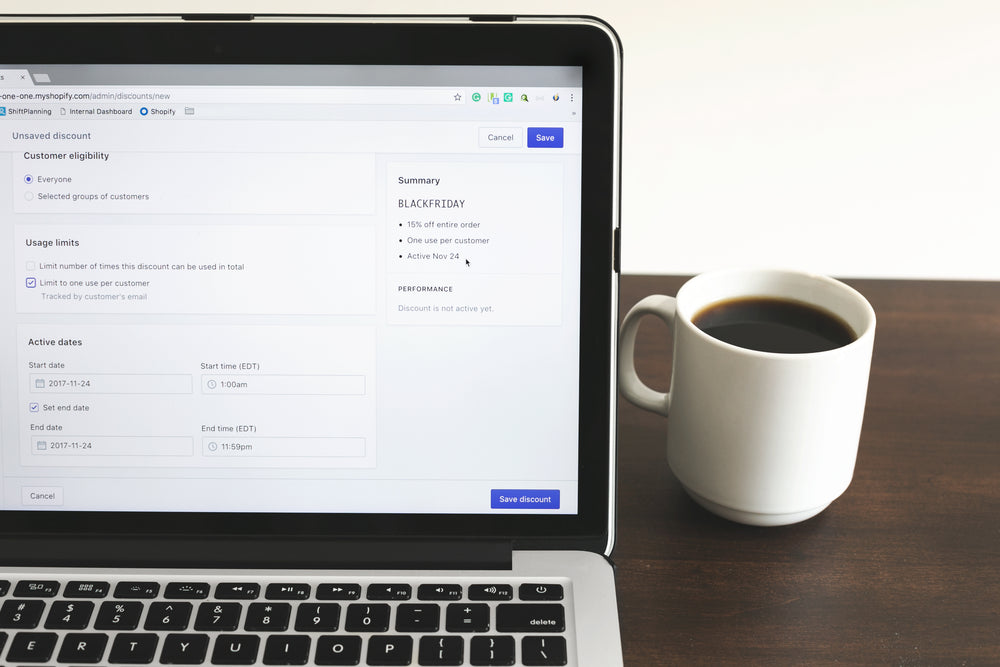
Human psychology is naturally wired to avoid loss. Scarcity and urgency leverage this 'loss aversion' by signaling that a specific opportunity is limited. Scarcity refers to a limitation in quantity—for example, only ten spots available in a workshop. Urgency refers to a limitation in time—such as a bonus that expires at midnight. When applied ethically and authentically, these elements compel prospects to make a decision rather than succumbing to the inertia of procrastination.
Hypothetical example: A boutique fitness studio might offer a 'New Year Kickstart' package. Instead of an open-ended discount, they could limit the offer to the first 20 sign-ups or state that the introductory pricing ends on January 5th. This creates a legitimate reason for the customer to act immediately. However, it is vital that these limitations are real. If a customer discovers that a 'limited' offer is permanently available, trust in the brand is permanently damaged.
It is also useful to distinguish between 'hard' and 'soft' urgency. Hard urgency involves a fixed deadline, while soft urgency uses language that implies a need for speed without a specific timer, such as 'while stocks last'. For high-ticket items, soft urgency is often more appropriate as it feels less transactional. For lower-priced impulse buys, hard urgency with a visible countdown timer can significantly increase conversion rates by reducing the time spent in the consideration phase.
Conversion = (Perceived Value + Urgency) / FrictionTo increase conversions, you must increase value and urgency while simultaneously decreasing the friction (effort) required to buy.
Risk Reversal and Guarantees
Every transaction involves an inherent risk for the buyer: the risk that the product won't work, that they will regret the purchase, or that they are overpaying. Risk reversal is the process of moving that burden from the customer to the business. The most common form is the money-back guarantee, but more creative options exist. By removing the fear of a 'bad' decision, you lower the barrier to entry and increase the likelihood of a trial.
Effective risk reversal should be bold and simple. A '30-day no-questions-asked' guarantee is often more effective than a complex policy filled with fine print. The fine print itself creates new friction, as customers worry about the 'catch'. While some business owners fear that generous guarantees will be exploited, most find that the increase in sales far outweighs the cost of a few additional returns or refunds, provided the core product is high quality.
Beyond monetary guarantees, consider 'satisfaction' or 'result' guarantees. For a service provider, this might mean 'we work until you are satisfied with the design' or 'if we don't hit X metric, you don't pay'. These performance-based guarantees are incredibly powerful because they align the interests of the business directly with the interests of the customer. They demonstrate a high level of confidence in the service, which acts as a strong social signal of quality.
Make your guarantee the centerpiece of your offer. If you are truly confident in your product, shout about the lack of risk.
Strategic Use of Bonuses and Premiums
Often, adding more value is more effective than lowering the price. Bonuses are additional items or services given away for free or at a discount when a customer accepts the main offer. The key to a successful bonus is that it must be 'complementary, not mandatory'. It should help the customer achieve their result faster, easier, or with more enjoyment, but the main product should still function perfectly without it.
Hypothetical example: An accounting firm offering a tax preparation package could include a bonus 'Financial Health Checklist' or a 30-minute 'Budgeting Strategy Session'. These bonuses cost the firm relatively little in time but have a high perceived value to a small business owner who is already thinking about their finances. The bonus solves the 'what next?' problem that often occurs after a primary purchase is completed.
When presenting bonuses, it is crucial to assign them a clear monetary value. This allows the customer to calculate the 'total value' of the package versus the price they are paying. However, avoid 'stacking' irrelevant bonuses. A large number of low-quality add-ons can actually decrease the perceived value of the main offer, making it look like you are trying to hide a weak core product behind a mountain of filler.
Pricing Strategy and Anchoring
The way you price an offer is as much about psychology as it is about margins. Price anchoring is a technique where you present a higher-priced option first to make the subsequent prices seem more reasonable. If a customer sees a 'Premium' tier at £1,000, a 'Standard' tier at £400 feels like a significant saving. Without the £1,000 anchor, the £400 price point is judged in a vacuum and may seem expensive.
Another effective strategy is the 'Decoy' effect. This involves offering three tiers where the middle tier is significantly closer in price to the top tier than it is to the bottom tier, but offers much less value than the top tier. This nudges customers toward the most expensive option because it appears to be the best value for money. Careful calibration of these tiers can significantly increase the average order value without increasing acquisition costs.
Transparency in pricing can also be a powerful component of an offer. Explaining why a product costs what it does—perhaps due to ethically sourced materials or specialised labour—can build trust and justify a premium price point. Customers are often willing to pay more if they understand the value and integrity behind the cost, whereas unexplained high prices can lead to skepticism and cart abandonment.
Simplifying the Call to Action (CTA)
The most brilliant offer will fail if the customer is confused about how to claim it. The Call to Action (CTA) must be singular and unmistakable. Ambiguity is the enemy of conversion. If you ask a customer to 'Learn More', 'Sign Up', and 'Contact Us' all on the same page, they may suffer from decision paralysis and do nothing at all. Choose one primary action that moves the prospect to the next stage of the funnel.
Visual design plays a significant role in CTA effectiveness. The button or link should stand out from the rest of the page through contrasting colours and white space. The language used should be action-oriented and, where possible, reflect the benefit of the offer. Instead of 'Submit', use 'Get My Free Guide' or 'Start My Trial'. This reminds the user of what they are receiving, rather than the action they are performing.
Friction in the checkout or sign-up process should be minimised. Every additional form field or click reduces the conversion rate. Assess your process to see if you can remove unnecessary steps. For instance, do you really need a phone number for a digital download? By streamlining the path from 'seeing the offer' to 'completing the offer', you ensure that the momentum generated by your marketing is not lost to technical hurdles.
Test your CTA on a mobile device. If it requires excessive scrolling or is hard to tap with a thumb, you are losing conversions.
Conclusion
Crafting an effective marketing offer is a continuous process of refinement and testing. It requires a deep empathy for your customer's situation and a willingness to stand behind your value with strong guarantees. While it is tempting to focus solely on the product, the 'wrapper' you place around that product—the price, the bonuses, the urgency, and the risk reversal—is what ultimately determines your success in the market.
Remember that an offer is a promise. Every time you fulfill an offer, you are building your brand's reputation. By focusing on creating genuine value and communicating it clearly, you can move away from competing on price alone and start building a sustainable business supported by loyal customers who see the unique worth in what you provide.
KEY TAKEAWAYS
- Identify the core transformation your product offers and lead with that benefit.
- Use authentic scarcity and urgency to encourage prompt decision-making.
- De-risk the purchase for the customer through bold, simple guarantees.
- Enhance the perceived value with complementary bonuses rather than just discounting.
- Ensure the Call to Action is singular, benefit-driven, and easy to execute.
General business education, not personalised financial, legal, or tax advice. Examples use hypothetical figures; results vary.
KNOWLEDGE INTO ACTION
Make your next decision a better one.
Put these ideas to work with our practical business resources.
Explore Resources